 Pixabay Pixabay
By Patty Pacelli
Human beings were made to work, and adults with autism are no different. Employment leads to a better mood, higher self-esteem, and improved physical health. It allows autistic adults to further develop their skills and understanding. Our son Trevor liked being around people and enjoyed the feeling of accomplishment at his jobs.
0 Comments
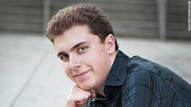 Northwest Center of Seattle recently hired Trevor Pacelli, a young adult on the autism spectrum, and one of his duties is to write blog posts for the company. In this post, he has written about his experiences with his past jobs and the varying degrees of inclusion in those workplaces.
Northwest Center is a nonprofit company that " . . . was founded in 1965 by parents who refused to institutionalize their children with developmental disabilities or accept the prevailing notion that their children couldn't be taught. Banding together to form Northwest Center, they hired their own teachers to develop education programs targeted to special needs children." (NWCenter.org) Their mission is "to promote the growth, development and independence of people with disabilities through programs of education, rehabilitation, and work opportunity." Trevor is thankful and excited to be working for Northwest Center. 
By Trevor Pacelli
I may land on the autism spectrum, I may have delayed speech development, I may be at times discomforting to talk to in person, I may get tired easily from being out a lot, but I still have proven that I’m just as capable as everybody else in working a satisfying career. 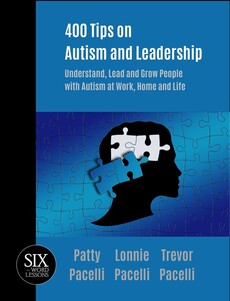 Three authors in one family have combined some of their most popular books about autism and leadership into one book that can help anyone understand, lead and grow people with autism at work, home and life.
This bundle, written by a family affected by autism, includes books and articles by Lonnie Pacelli, noted leadership consultant and father of a young adult with autism, as well as Patty Pacelli, autism advocate and mother of a young adult with autism, and Trevor Pacelli, their son, who was diagnosed at age 5 and has written two books about his experiences growing up autistic. The book is available in paperback and ebook on Amazon. 
By Lonnie Pacelli
The Israeli Defense Force (IDF) Special intelligence Unit 9900 is dedicated to everything related to geography, including mapping, interpretation of aerial and satellite photographs and space research. Within this unit there is a small unit of highly qualified soldiers, who have remarkable visual and analytic capabilities. They can detect even the smallest details, undetectable to most people. These soldiers all have one thing in common; they are on the autism spectrum. Their job is to take visual materials from satellite images and sensors in the air. With the help of officers and decoding tools, they analyze the images and find specific things necessary to provide the best data to those planning missions. The IDF has found that soldiers with autism can focus for longer periods of time than their neurotypical (non-autistic) counterparts (source: IDF Blog). |
Inspiration for Life with AutismThis blog has a variety of articles about people living life with autism, and topics and ideas that can help in the journey. Guest bloggers are welcome. Inspired by Trevor, a young adult film critic, photographer and college graduate on the autism spectrum. Categories
All
Archives
July 2024
|
 RSS Feed
Proudly powered by Weebly